 Shop 1/123 Brown Plains Rd,
Brown Plains, QLD 4118
Shop 1/123 Brown Plains Rd,

24/7 Rapid Response

Licensed & Certified

Value for Money

Visible Deterrence

Competitive Rates
On the 5th of August 2024, the Australian National Terrorism Threat Level was raised to “Probable,” signifying that the Australian Security Intelligence Organisation (ASIO) assessed the chance of an onshore attack as greater than 50% within the next 12 months. Although the risk remains low that you will experience an attack, it is crucial that we remain aware and informed as a community to deny, deter, and detect suspicious activity.
The Australia-New Zealand Counter Terrorism Committee (ANZCTC) defines hostile reconnaissance as the purposeful observation of people, vehicles, buildings, places, and spaces to collect information that informs the planning of an attack against a specific target by people with hostile intent. It may be conducted onsite, online, and may also include rehearsals, where one or more elements of the plan are practised.
The primary objectives for hostiles are to collect information that will help them to:
ANZCTC recommends the following principles during suspected hostile reconnaissance to disrupt a potential attack:
Hostiles may collect the above information by:
It is important to remain vigilant within the current national security landscape and remember: “If it seems suspicious, report it.”
You can report suspicious activity (or something that simply does not add up) by calling the National Security Hotline on 1800 123 400.
Contact JR Security today to discuss how we can assist in keeping your staff more informed to deny, detect and deter.
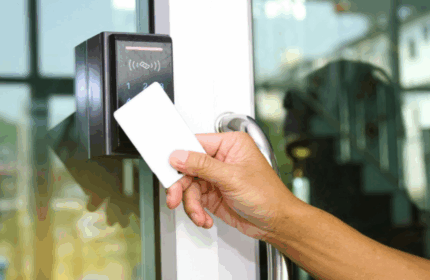
As organisations continue moving toward digital transformation, one of the most significant shifts in recent ...

Australia’s Security of Critical Infrastructure Act 2018 (SOCI Act) is more than just a piece ...
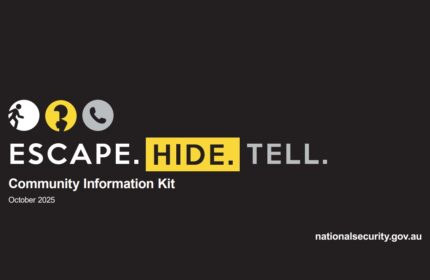
The Australian & New Zealand Counter Terrorism Committee has released today, the Escape. Hide. Tell ...


 1300 901 450