 Shop 1/123 Brown Plains Rd,
Brown Plains, QLD 4118
Shop 1/123 Brown Plains Rd,

24/7 Rapid Response

Licensed & Certified

Value for Money

Visible Deterrence

Competitive Rates
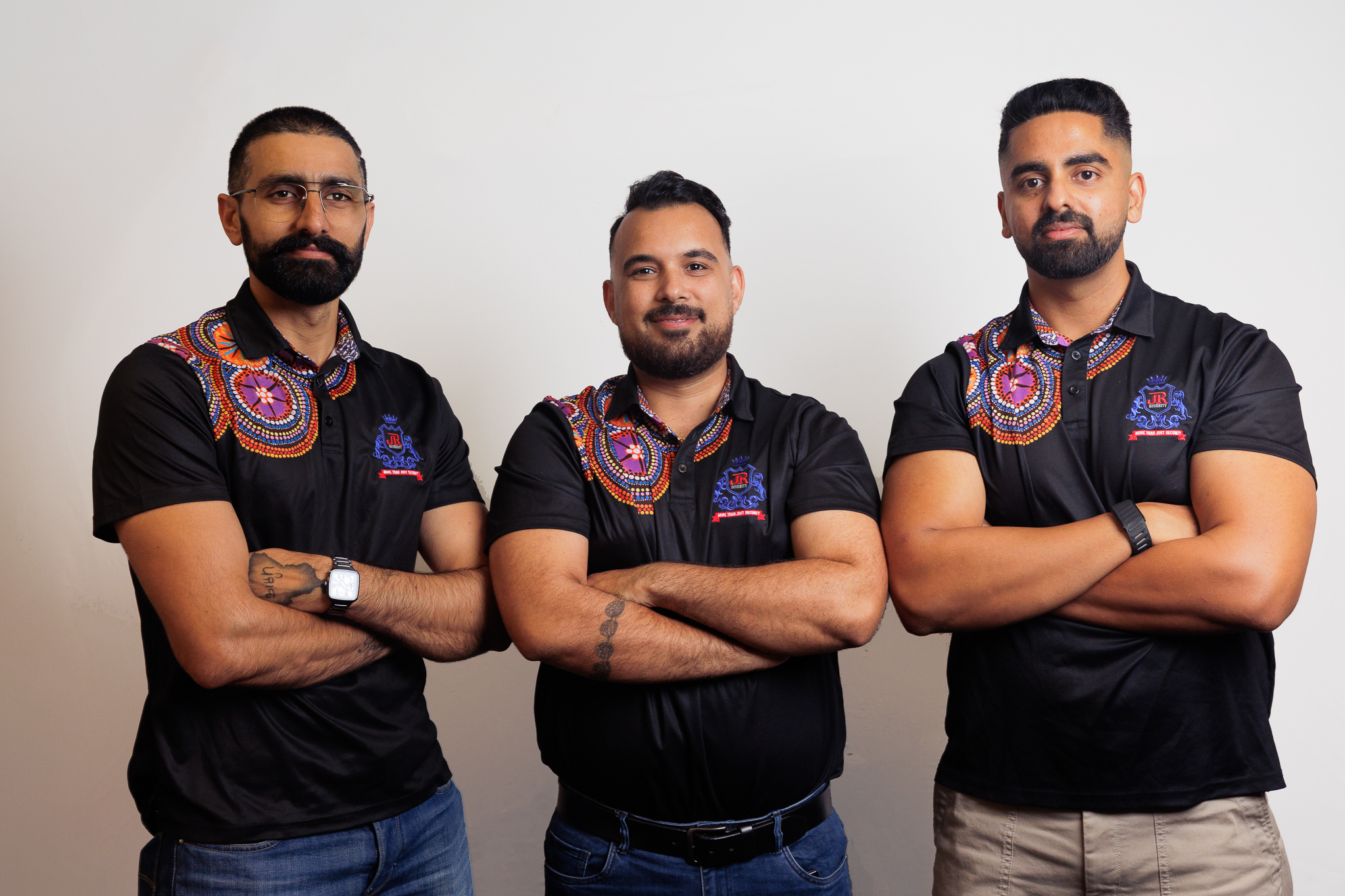
Following our last blog post titled The 33-Millisecond Decision, we caught up with its author and JR Founder, Rav Sandher, for a chat.
01 What Inspired You to Found JR?
There’s a region deep in the human brain called the amygdala. It’s ancient — older than language, older than logic. Its entire purpose is to scan the environment and answer one primal question: Am I safe?
Every person walking into a building, attending an event, or stepping onto a construction site has that silent process running in the background, whether they realise it or not. When the answer is “yes,” their nervous system settles, cortisol drops, and they’re free to focus, work, create, and connect. When the answer is “no,” everything else stops.
I spent years in the security industry watching providers treat that deeply human need as a checkbox exercise. A body on-site. A logbook signed. And I kept thinking — we’re in the business of something profoundly important, and we’re treating it like it’s ordinary.
In 2017, my business partner Jeet and I founded JR Security Services Australia because we believed the industry deserved better, and more importantly, the people relying on it deserved better. We didn’t want to be another provider. We wanted to build a company that truly understood what safety feels like — not just what it looks like on paper. Every decision we’ve made since, from Queensland to a national footprint across seven offices, traces back to that conviction: security is not a commodity. It’s the foundation that lets everything else in a person’s day function.
02 What Makes JR Security Stand Out From Other Providers?
The human brain makes a judgement about whether it trusts someone within 33 milliseconds of seeing their face. That’s faster than a single heartbeat.
Before a guard speaks, before they check credentials, before they do anything at all — the person in front of them has already begun deciding whether they feel safe or uneasy. That millisecond moment is why JR exists in a completely different category.
We hold triple ISO certification across quality, environmental management, and workplace safety. We’re proud ASIAL members. We maintain contracts with government entities, international consulates, and major corporations across Australia. Those credentials matter — but they’re the architecture. The real difference is the culture that lives inside it.
Co-regulation: Psychologists use this term to describe the process by which one calm, competent person can physiologically settle an entire room. Every one of our over 500 team members are trained with one understanding: you are not guarding a site, you are regulating the nervous system of every person who encounters you. Your posture, your composure, your attentiveness — these are not soft skills, they are the mechanism through which safety is transmitted.
We also refuse to play the game that has hollowed out this industry — racing to the bottom on price while quietly eroding service quality, award compliance, and officer welfare. When a major national provider collapsed recently, many of their clients came to us, not because we were the cheapest option, but because they needed a partner they could trust not to make the same mistakes.
Other companies sell presence. We deliver the physiological experience of safety. That’s a distinction most providers can’t even articulate, let alone deliver.
03 What Do You Want JR’s Legacy to Be?
There’s a concept in neuroscience called “neuroception” — coined by Dr. Stephen Porges. It describes the way your nervous system unconsciously detects safety or danger, completely below the level of conscious thought.
You’ve felt it. You walk into a space and something just feels right — calm, organised, someone clearly in control. Or you walk in and something feels off, even if you can’t explain why. That invisible signal is what our entire industry is ultimately responsible for, and I believe most of it doesn’t take that responsibility seriously enough.
I want JR’s legacy to be the company that changed that. The organisation that elevated security from a transactional service into a profession built on understanding people — how they experience fear, how they process trust, how their bodies respond to environments where someone genuinely competent is looking out for them.
I want young professionals to see a career in security and feel pride, purpose, and a genuine path to growth.
We started JR to prove that integrity and commercial success aren’t opposites. That legacy — the proof that caring more leads to performing better — is what I want us to leave behind.
By Rav Sandher — National Business Manager & Co-Founder, JR Security Services Right now, as ...
According to the Queensland Government Statistician’s Office (Crime Report, Queensland 2023-24): JR Security Services is ...

In today’s logistics and manufacturing environment, compliance, safety and accountability are just as critical as ...
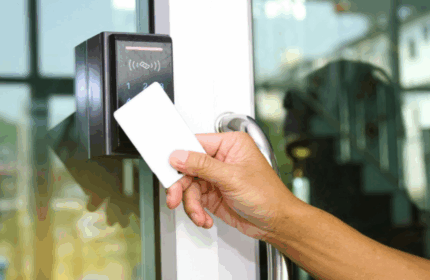
As organisations continue moving toward digital transformation, one of the most significant shifts in recent ...

Australia’s Security of Critical Infrastructure Act 2018 (SOCI Act) is more than just a piece ...


 1300 901 450